
A Standard for AI Sky Replacement
Sky replacement is the most-requested and most-faked shot in the book. Our standard treats it as a signal problem, not a paint problem: a replacement only succeeds if the mathematical integrity of the original plate survives it.
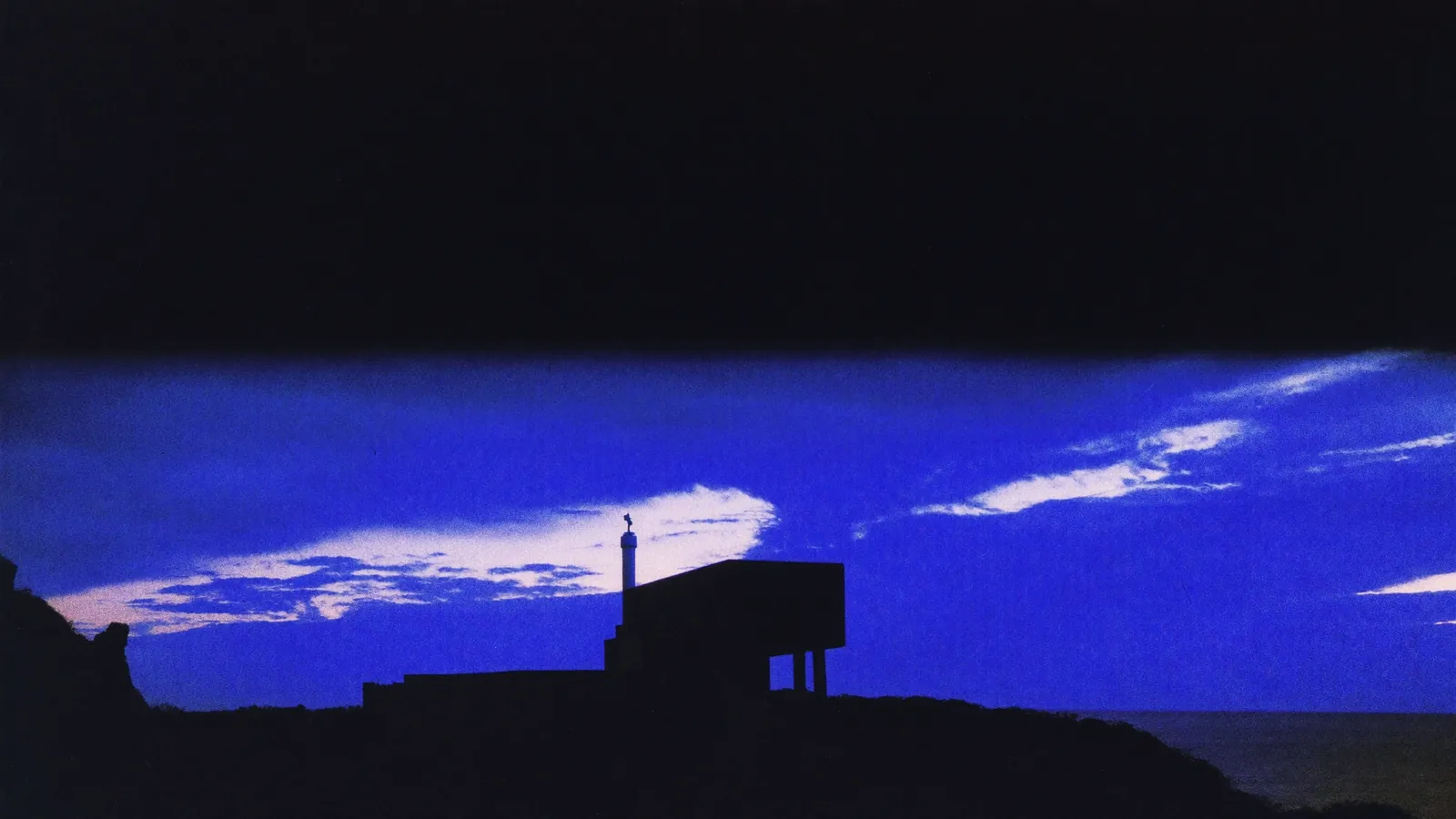
Everyone can drop a prettier sky behind a building. The hard part — the part that separates a holiday snap from a deliverable VFX shot — is doing it without disturbing everything below the horizon. The moment a sky replacement also nudges the building's edges, the foreground color, or the noise floor of the plate, you've stopped compositing and started repainting. And repainting shows.
Our governing principle is blunt: signal over subjectivity. "Looks better" is not a pass condition. "The original plate is mathematically intact and the new sky obeys the same light" is.
The image isn't redder — it's more truthful.
1 · Conform before you touch anything
No AI processing is permitted until the plate's baseline is confirmed: a known color space and gamma, a verified bit depth, and a clean, stable source (an image sequence or high-quality intermediate, not a delivery-compressed file). We establish the baseline scope first — and any deviation in the midtones or shadows introduced during processing is flagged as a failure, not a style choice. You can't protect an integrity you never measured.
2 · A hybrid model strategy, chosen on behavior
We run a two-path approach: a primary model (an in-house fine-tune) carries the look — luminance realism, fine cloud micro-variation, a noise-free highlight roll-off — and a secondary model runs validation, cross-checking temporal stability and structural realism. The key discipline: models are selected on signal behavior, especially highlight handling — not aesthetic preference. A sky that's gorgeous but clips its highlights or shimmers frame-to-frame fails the validation pass no matter how good the still looks.
3 · The mask constraint
This is the heart of it. Horizon protection and architectural edge preservation are paramount, so only the top portion of the waveform — roughly the upper 20–25% — is ever unlocked for manipulation. Everything below stays pixel-locked. We describe it as surgical: we're operating, not painting. The building's geometry has to remain exactly itself; only the sky is in play.
Because the constraint is expressed on the signal, it's also checkable on the signal: if anything below the unlock line moved, QC sees it immediately, and the shot goes back. No subjective debate about whether the edge "feels" clean.
Key takeaways
- A sky replacement succeeds only if the original plate's signal stays intact — measure it, don't eyeball it.
- Conform and baseline the plate before any AI touches it; mid/shadow deviation = failure.
- Pick models on signal behavior (highlight roll-off, temporal stability), not on the prettiest still.
- Constrain manipulation to the top ~20–25% of the waveform — protect the horizon and architecture.
Need a sky that survives the timeline?
We do AI sky replacement to a signal-validated standard — clean horizons, stable in motion, delivery-safe. Send us the plate.
Book a Call ↗