
Color That Survives the Wall
An ICVFX color pipeline for HDR virtual production — how we keep color consistent from the game engine to the LED volume to the final grade, so what the director approves on the day is what lands in post.
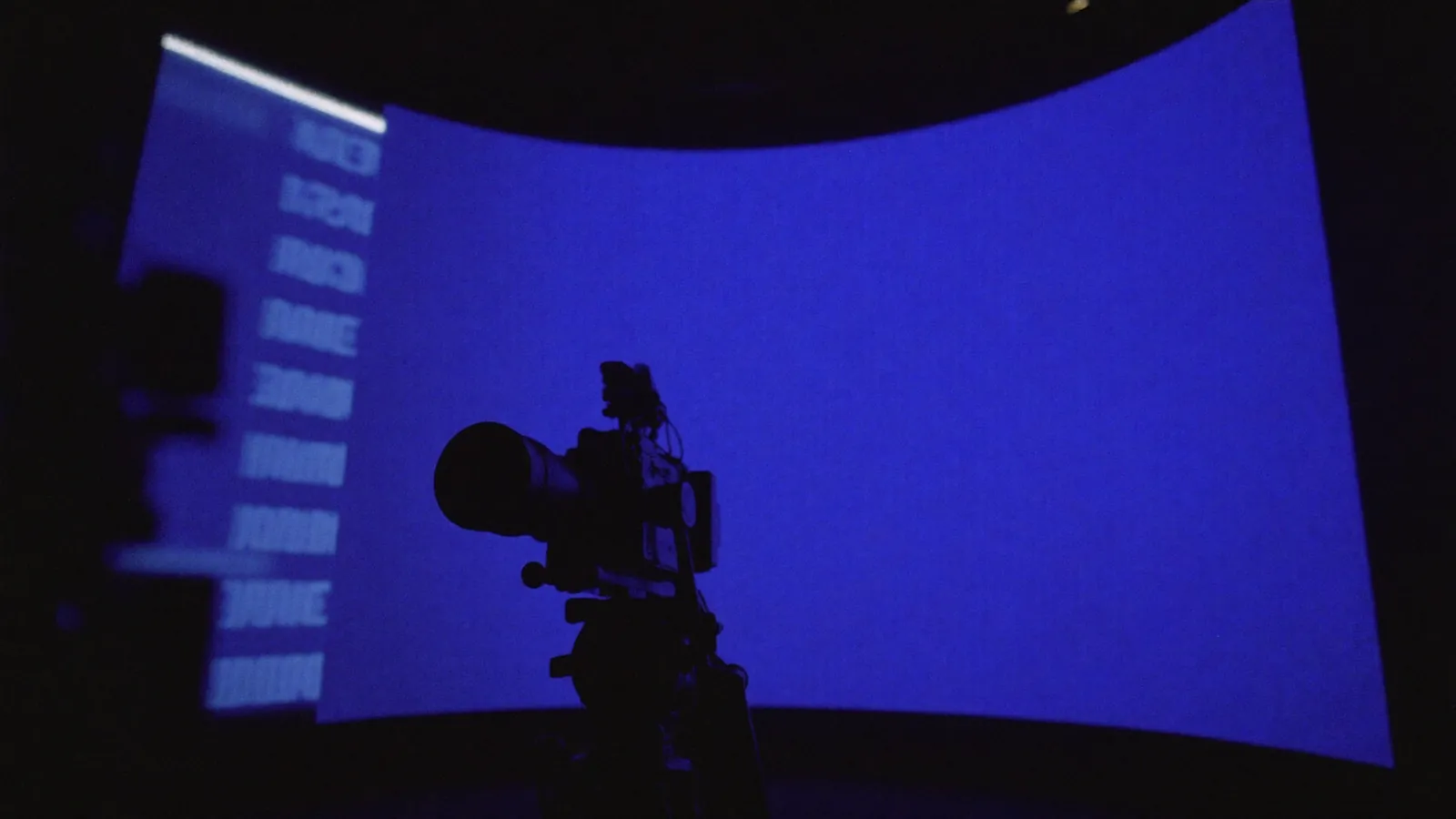
On an LED-volume shoot, color has to agree with itself in four places at once: the render coming out of the engine, the light the wall actually throws, the capture in-camera, and the master the colorist grades weeks later. When those four disagree — and by default they do — you get the all-too-familiar virtual-production tax: footage that looked perfect on set arrives in post slightly off, and someone spends days re-grading to rescue it.
This is fundamentally a virtual production color management problem, and it's solvable. Below is the principle behind the color pipeline we run for ICVFX (in-camera VFX) work — what it protects against, and why it holds up through delivery. We'll keep it conceptual; the production-specific transforms stay in the kit.
Why the color drifts
Inside the engine, color is scene-linear — values are proportional to physical light, which is exactly what you want for rendering and compositing. But no display is linear, and an HDR LED wall least of all. To show that linear image, it has to be converted to a display-referred space through a transfer function. Do that conversion casually — or differently in each department — and every hand-off introduces a small, compounding shift. By the time the plate reaches the colorist, "small" has become "noticeable."
HDR makes it worse, because the interesting information lives in the highlights — the practical lamps, the sky, the specular hits on a car. Naively mapping a high-dynamic-range signal to a display range clips those highlights to white, and clipped detail can't be recovered downstream.
One color contract, end to end
The fix isn't a clever LUT bolted on at the end — it's a single color contract that every department reads from. We define the studio's working space (primaries and white point), the scene-linear → display transform for the wall, and the inverse back to linear, then express all of it through OpenColorIO (OCIO) so the engine, the volume, comp, and post are literally referencing the same configuration.
Practically, that means the transform from render to LED is the same math the colorist inverts in the suite. Nobody is "matching by eye" between rooms. When color management is a shared config instead of a per-artist habit, the drift simply has nowhere to accumulate.
HDR without the clipping
For the high range, we lean on a perceptual transfer function (the PQ family) because it allocates code values the way the human visual system actually perceives light — more precision where the eye is sensitive, less where it isn't. Tone-mapping then compresses the very brightest values into the displayable range while preserving their relationships, and a final clamp acts as a safety rail, not a creative decision. The order matters: perceptual encode, then tone-map, then clamp — never clamp first and lose the data you were trying to keep.
What this buys you on the day
- Trustworthy monitoring. What the director and DP approve on the volume is what the colorist receives — approvals mean something.
- Less rescue work in post. The grade starts from a faithful plate instead of a reconstruction, so days come back to the schedule.
- HDR that stays HDR. Highlight detail survives the trip instead of clipping the moment it leaves the engine.
- Department parity. Lighting, VFX, and post argue about creative choices, not about whose monitor is "right."
Color management isn't a finishing step. It's a contract you sign before the first frame renders.
Key takeaways
- LED-volume color drift is a hand-off problem — solve it with one shared color contract, not end-of-line LUTs.
- Keep scene-linear for render; convert to display-referred with a perceptual (PQ) transform for HDR.
- Encode → tone-map → clamp, in that order. Clamping is a safety rail, never the creative move.
- Express the whole thing in OCIO so engine, volume, comp, and grade read identical math.
Planning an LED-volume shoot?
We design and run ICVFX color pipelines so your dailies and your delivery agree. Let's pressure-test your setup before you're on the clock.
Book a Call ↗