
AI Hero Shots for Commercials: When the Product Becomes the Story
A professional hero shot is not decoration. It is the moment that makes a product feel valuable, memorable and worth choosing. Here is how AI can create that moment, and when it should not.
Independent Cinematechs R&D · speculative product-film study
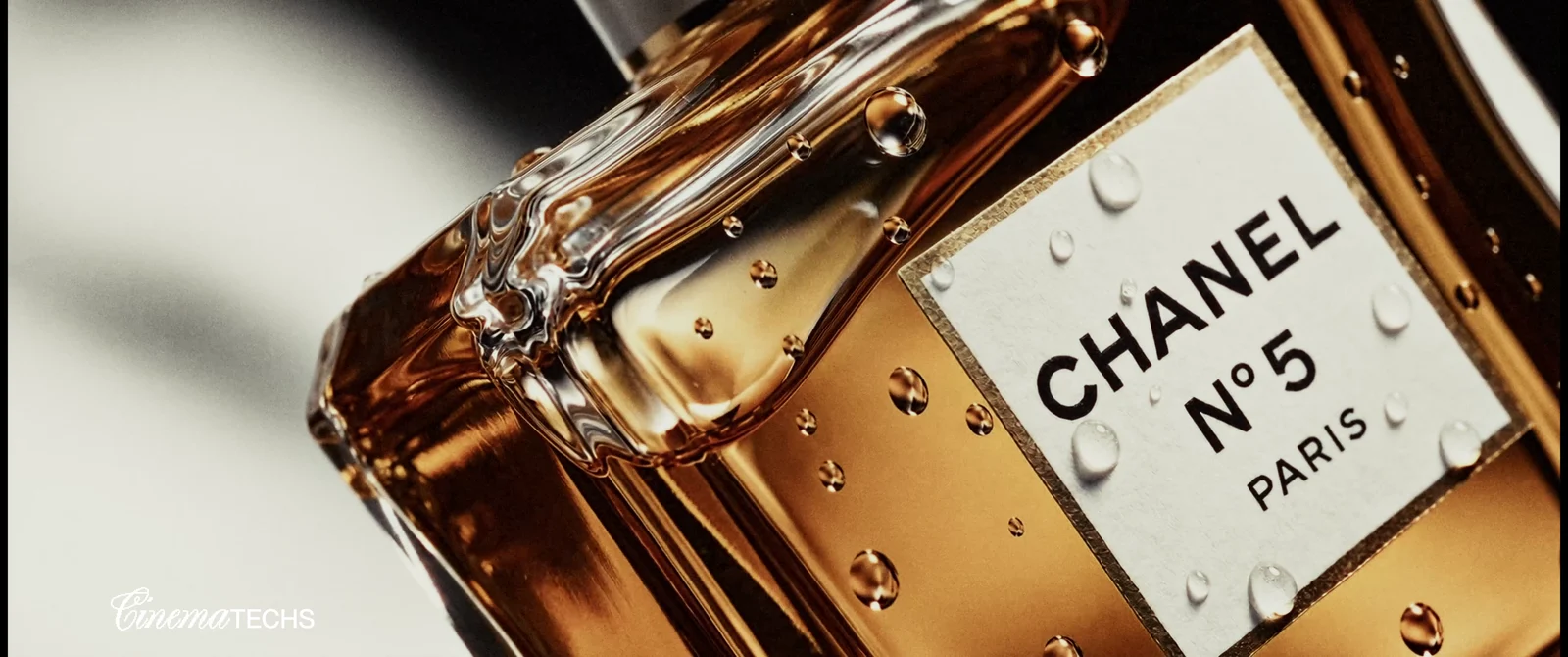
A seven-second AI hero shot, built as a seamless loop: an amber fragrance bottle in macro detail dissolving into the same bottle reflected on a dark, wet surface. Muted, looping, and paused automatically when it scrolls out of view. This is an independent Cinematechs study, not a commissioned campaign.
A client rarely calls and asks for an AI hero shot. They call because the launch is three weeks away, the product sample arrived late, the media team needs six formats, and the campaign still lacks the one image that makes the product feel important. The brief is not "use AI." The brief is "make people want this."
That gap, between an object on a table and a promise an audience can feel, is where the hero shot lives. Done well, it is the moment a product stops being a thing you buy and becomes something you want: confidence, appetite, status, relief, speed, beauty, belonging. This article is about solving that business problem, not about celebrating software. AI hero shots for commercials are useful precisely when they are treated as a production strategy rather than a novelty.
What is a hero shot?
A hero shot is the campaign's defining product image or moving shot. It is the frame audiences remember, the visual used to introduce the product, and the moment the rest of the campaign is built around. Everything else, the cutdowns, the social edits, the product-page loop, tends to orbit it.
It is worth being precise about what a hero shot is not. It is not a basic pack shot, the flat utility image that proves a product exists. It is not ecommerce photography optimised for a white background and a grid. It is not generic AI-generated footage with no editorial point of view. And it is not a finished thirty or sixty-second commercial. A hero shot may be on screen for only three to eight seconds, yet it can carry the perceived production value of the entire campaign. Get it right and the small stuff feels premium. Get it wrong and even an expensive edit feels thin.
The product does not need to sit in the story. It can be the story.
Most advertising puts a product inside a human world: someone drives the car, wears the watch, opens the bottle. That works. But there is another approach, and it is often the more memorable one. What changes when the product itself, rather than a celebrity or a lifestyle scene, becomes the central character?
Take the fragrance study on this page. With the product as the lead, the storytelling shifts to its physical language: shape and surface, reflection and texture, the label, the material, the way light bends through glass and liquid. Movement becomes a character choice. A slow push-in reads differently than a rushed reveal. Then there is the world around it, the emotional register the staging implies, and even the sound design a shot invites before a single note is added. None of this is decoration. It is the vocabulary you use to make a viewer feel something specific in a few seconds. Treat this as a speculative R&D exploration, not a client campaign: the point is the method, not the brand on the label. For commissioned pieces we have actually delivered, see our work.
The business problems AI hero shots can solve
Clients arrive with problems, not tool requests. Here are the ones that come up most, and how an AI-assisted hero shot actually helps.
The launch deadline arrives before the campaign
When the timeline compresses, AI-assisted production can begin from what already exists: approved product photography, CAD, packaging references or a prototype. You can start shaping the hero moment while the wider campaign is still being assembled. This is not a promise of same-day final delivery. It is a way to stop waiting for every physical asset before creative work begins.
One master commercial is not enough anymore
A single edit rarely covers a modern media plan. A hero-shot system can extend into 16:9 masters, 9:16 social video, 1:1 and 4:5 paid-media assets, six-second bumpers, fifteen-second cutdowns, product-page loops, launch teasers, regional versions and seasonal variations, all descended from one approved idea rather than assembled from unrelated clips.
The strongest idea is difficult to film physically
Liquid worlds, impossible reflections, microscopic environments, transformation shots and camera moves that would normally demand a large tabletop stage, a motion-control rig, complex simulation or heavy CGI, these are where AI-assisted work earns its place. It does not remove finishing, compositing or human supervision. It changes what is reachable within a budget.
Reshoots keep creating delays
Once a visual system is approved and the product is locked, controlled changes to background, lighting, colour and format can happen without rebuilding the entire shoot. Major product changes or new performances may still require real production. The goal is fewer avoidable reshoots, not the pretence that nothing ever needs shooting again.
The product looks ordinary
Lighting, staging, motion and scale shape perceived value. The purpose is never to misrepresent the product. It is to reveal the emotional idea behind it, the reason someone would choose it, in a way a flat catalogue image cannot.
Creative teams need to test more than one direction
Before committing a full production budget, AI hero-shot development is a fast way to explore competing concepts and previsualise them. It is the same instinct behind treating AI previsualization as a production contract: decide what you are making before you pay to make it.
A hero shot is not a prompt
This is the part most "AI ad" conversations skip. A generator can make frames. A commercial pipeline makes an approved, repeatable, deliverable result. Between those two things sits a lot of craft.
- Strategy
- Product reference prep
- Art direction
- Storyboarding
- Camera logic
- Lens and lighting decisions
- Product-geometry locking
- Label and typography preservation
- Material accuracy
- Motion design
- Temporal-consistency review
- Editing
- Compositing
- Colour finishing
- Sound design
- Legal and brand review
- Human approval
A generator can create frames. A pipeline creates an approved, repeatable, deliverable result.
If you are choosing a partner, the presence or absence of that pipeline is the real question. It is worth knowing what to ask before hiring an AI film studio, and understanding what an AI film studio actually is versus a thin add-on bolted onto a generator. That full pipeline, from reference to finished delivery, is what our AI Studio is built around.
Product fidelity is the real test
Beautiful lighting is easy to admire and easy to fake. Product fidelity is where AI advertising usually falls apart. The common failure modes are specific and, once you know them, impossible to unsee: warped packaging, a bottle whose geometry shifts frame to frame, a misspelled label, a logo that drifts, wrong colours, invented materials, reflections that break between frames, product scale that changes mid-shot, unstable liquid simulation, and products that look subtly different across campaign variations.
Our approach is deliberately unglamorous. Establish a brand-approved source image or 3D reference. Lock the product silhouette and its critical geometry. Separate the creative variables from the protected variables, so the things that must never change are ring-fenced. Generate motion around the product rather than redesigning it each time. Validate frames in motion, not just as stills, because instability hides between frames. Composite or replace critical label elements when necessary. Then finish the result through a professional colour and delivery pipeline. This is the same signal-first discipline behind our forensic QC for broadcast-safe AI shots: trust the measurement, not the vibe. It is also why fidelity is handled inside a real production pipeline rather than a generator, which is exactly what our AI Studio exists to run.
Can AI replace a traditional commercial shoot?
No, not in every situation, and that is not the goal. The useful question is not "AI or a shoot?" It is "what does this particular campaign need?"
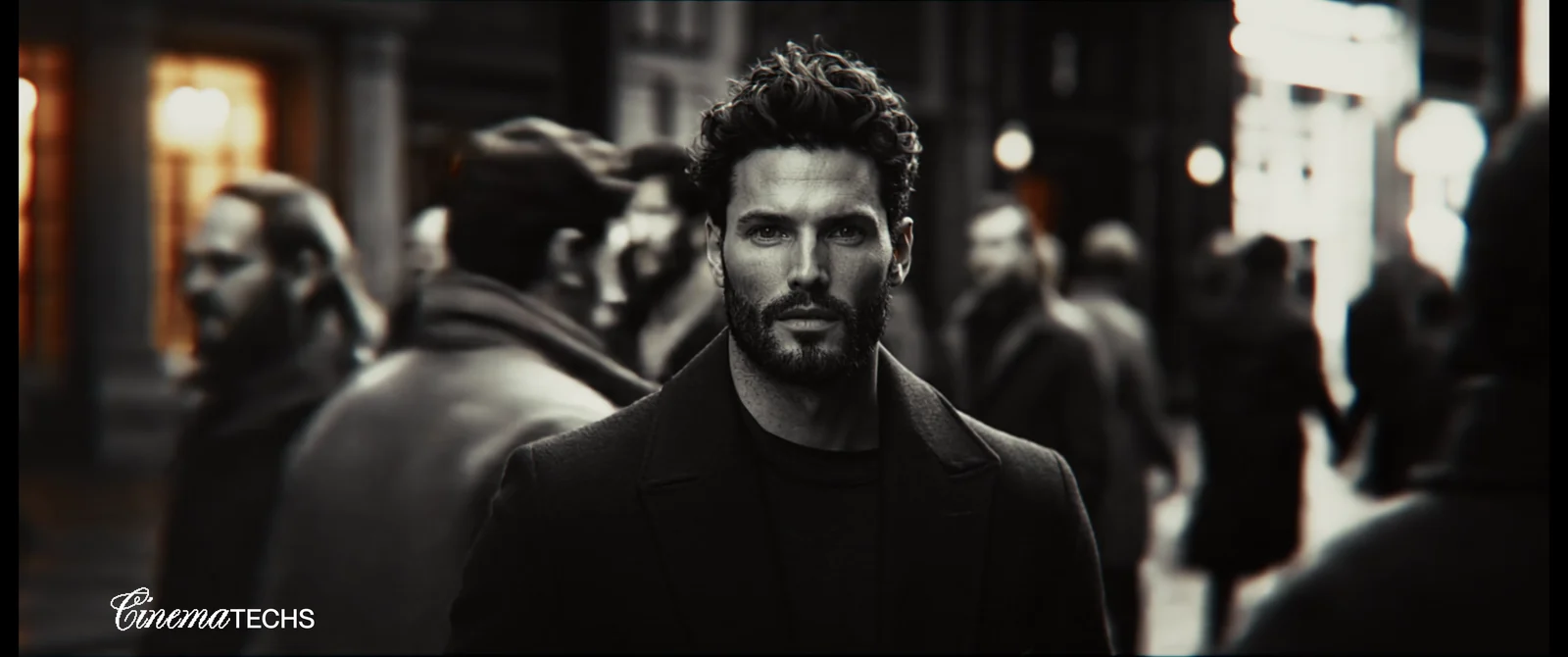
Use live action when authentic performance, documentary truth, tactile interaction, regulated demonstrations or precise human emotion are central to the message. Use AI-assisted production when the campaign needs concept exploration, impossible product worlds, previsualization, product-centric hero moments, environment replacement, additional campaign variations, format adaptation, visual effects, or a bridge between the assets you have and the campaign scale you want. Often the best answer is hybrid: real product photography and live-action talent, combined with CGI, AI generation, compositing and traditional finishing. Choosing well is easier once you understand how AI VFX and traditional VFX differ in practice.
From one hero shot to a campaign system
A strong hero concept should not end as a single clip. It should generate a connected family of assets. The scale comes from an approved visual language, not from producing random unrelated videos and hoping they feel related.
- Hero ideathe emotional concept
- Master shotthe reference build
- Cutdowns6s, 15s, loops
- Platform formats16:9, 9:16, 1:1, 4:5
- Variationsmarkets, seasons
Variables that may change
- Camera distance
- Background
- Secondary colour
- Product orientation
- Opening hook
- Duration
- Market message
- Format
Protected variables
- Product design
- Logo
- Label
- Brand colour
- Material
- Core lighting philosophy
- Campaign tone
How should a business measure the result?
A hero shot is a business asset, not just a pretty frame, so it should be evaluated like one. We will not invent numbers for you, but here is what is genuinely worth measuring: thumb-stop or first-three-second retention, video completion rate, click-through rate, product-page engagement, conversion rate, cost per usable campaign asset, approval time, the number of approved variations, cost of localization, creative-fatigue rate, brand-recall testing, and qualitative audience response. Cost per usable asset is the one worth arguing about internally, and our AI video production pricing guide explains how we structure scope so that number stays honest.
- Thumb-stop / 3-second retention
- Video completion rate
- Click-through rate
- Product-page engagement
- Conversion rate
- Cost per usable asset
- Approval time
- Approved variations produced
- Localization cost
- Creative-fatigue rate
- Brand-recall lift
- Qualitative response
The temptation is to admire a beautiful frame and stop there. Resist it. If the shot does not move at least one of those numbers, it is art, not advertising.
When AI hero shots are the wrong choice
Credibility means saying when not to use this. Skip AI-generated advertising when spectacle is being used to disguise a weak strategy, because a gorgeous shot cannot rescue an idea that has nothing to say. Skip it for products that require precise, regulated demonstrations, or for unsupported health, technical or performance claims. Skip it when audience trust depends on documentary authenticity, and when you do not hold permission to use the product, the talent or the reference material. Skip it for campaigns that genuinely cannot tolerate any visual interpretation. And skip it when a simple real tabletop shoot is faster, cheaper and more honest. Knowing where the line sits, including around local-first AI and protecting your intellectual property, is part of doing this responsibly.
The five seconds that carry the launch
The purpose of a hero shot is not to prove that AI can produce a beautiful image. Its purpose is to give the audience one clear reason to feel something about the product, and to give the business a visual idea strong enough to build a campaign around. That is the whole job. Whether AI hero shots for commercials are right for your launch depends on the problem you are actually solving, which is a better conversation than "should we use AI."
The product may only be on screen for five seconds. The job is to make those five seconds carry the weight of the launch.
What problem are you trying to solve?
Pick the closest one. You will get the approach we would suggest, what we would need from you, and what should stay human-led.
Frequently asked questions
What is an AI hero shot in advertising?
An AI hero shot is the campaign's defining product image or short moving shot, created with AI-assisted production and finished through a professional pipeline. It is the frame audiences remember and the visual the rest of the campaign is built around. It may last only a few seconds, but it carries the perceived production value of the whole launch.
How is an AI hero shot different from an AI product video?
A hero shot is one deliberate, art-directed moment engineered to be memorable and repeatable across a campaign. A general AI product video is often longer, more explanatory and less controlled. The hero shot protects product geometry, label and brand colour so it can anchor a family of assets rather than exist as a single clip.
Can an AI hero shot maintain the exact product label and packaging?
It can, but only with a disciplined process. We start from a brand-approved reference, lock the product silhouette and critical geometry, and composite or replace label elements when a generator drifts. Raw generation alone frequently warps text and packaging, which is exactly why professional finishing and human review remain part of the pipeline.
Can one hero shot be adapted for TikTok, Instagram, YouTube and television?
Yes. An approved hero concept can be reframed into 16:9, 9:16, 1:1 and 4:5, and cut down into six-second bumpers, fifteen-second edits and product-page loops. Platform rules, safe areas and ad policies differ, so each version is adapted rather than simply exported. The product and brand elements stay protected across all of them.
Does AI make a professional commercial cheaper?
It can reduce specific costs, such as building impossible sets, repeating shoots for variations, or localising assets. It is not automatically cheap. Strategy, art direction, finishing and review still take skilled time. The honest measure is cost per usable, approved campaign asset, not the price of a single generated clip. Our AI video production cost guide goes deeper.
How long does an AI product hero shot take to produce?
It depends on scope, references and revision rounds. Concept exploration can move quickly, but a broadcast-ready, brand-approved hero shot with locked packaging and full finishing takes real production time. We do not promise same-day final delivery. We do help teams start earlier, often before every physical asset is ready.
Can AI hero shots replace product photography or CGI?
Not in every case, and that is not the goal. Product photography and CGI still win when you need absolute accuracy or a specific controlled setup. AI is strongest for concept exploration, impossible worlds, environment work and campaign variations. The best results often combine real photography, CGI, AI generation, compositing and traditional finishing.
Can a brand create an AI commercial before the physical product is available?
Often yes, if there is reliable reference. Approved product photography, CAD, packaging art or a prototype can seed the work while the final product is still in production. Accuracy depends entirely on the quality of that reference. Anything the reference does not confirm should be treated as a creative proposition, not a factual claim.
Will customers care that a product commercial used AI?
Audiences care about honesty and quality more than the tool. If a visual misrepresents what the product does, that is a trust problem regardless of how it was made. Disclosure expectations vary by platform, category and territory. When the work is authentic to the product and clearly art-directed, the method rarely becomes the story.
How do you prevent an AI product commercial from looking generic?
With direction, not defaults. Deliberate lens and lighting choices, a specific colour philosophy, controlled motion, protected brand elements and a real editorial idea are what separate a hero shot from stock-looking output. Generic results usually come from skipping art direction, not from the technology itself.
Who owns the final AI-generated commercial assets?
Ownership depends on your contract, the AI models used and their commercial-use terms, plus the rights to any source images, product likeness, talent and music. It is not automatic. We clarify usage and licensing in writing before delivery, and we flag anything that needs the brand's legal review before publication.
When should a business avoid AI-generated advertising?
Avoid it when the message depends on regulated demonstrations, precise performance claims, documentary authenticity, or permissions you do not hold for the product, talent or references. Avoid it when a simple real tabletop shoot would be faster and more appropriate, or when spectacle is being used to disguise a weak strategy.
What should your product's five seconds feel like?
Bring us the product, the audience and the business problem. We will help you find the hero moment, and determine whether it should be filmed, generated or built through a hybrid pipeline. We work with brands and agencies on AI video production in Toronto and beyond.
Discuss a Product Film ↗