
AI Video for Real Estate: What Toronto Developers Actually Need to Know
You're selling something that doesn't exist yet. That single fact is why marketing a Toronto pre-construction condo is harder than almost anything else — and why the developers converting best right now are leading with film instead of a folder of renders.
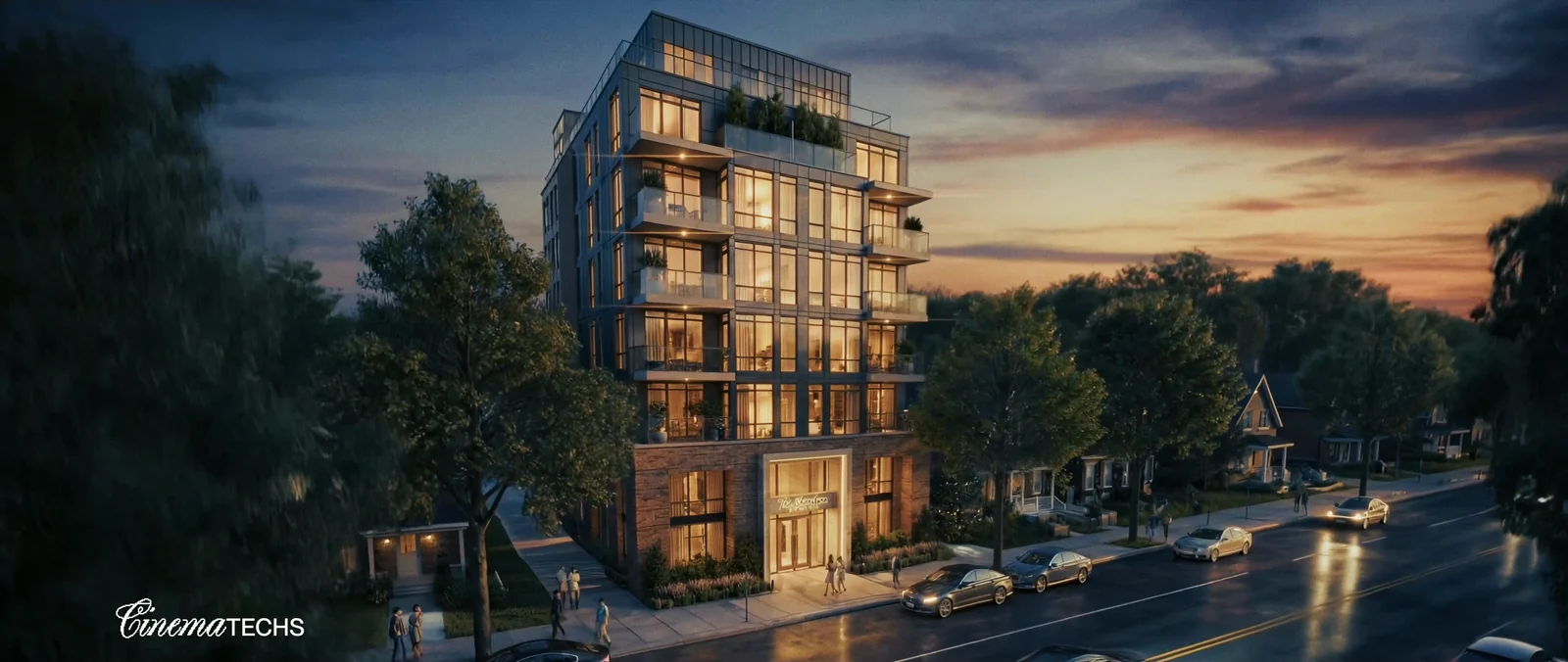
A buyer can't walk a unit that hasn't been built. They can't stand on the balcony at seven on a June evening and watch the light come off the lake. They're wiring a deposit against a promise, and the entire marketing job is to make that promise feel real enough to sign for.
For a long time the answer was renders: a handful of glossy stills, maybe a slow turntable of the massing. Those still earn their keep. But a still is a single frozen second, and the thing that actually sells a home is everything that second leaves out — how a room opens up as you move through it, how the light shifts from morning to dusk, what the street feels like when the windows come on. That gap is the whole argument for video, and it's why the sharpest developers in Toronto are opening with a film and using the renders as support, not the other way around.
Why video is winning the pre-sale race
Motion carries the three things a render can't: time, sequence, and life. A film can take a buyer from the lobby to the terrace in one unbroken move, run a whole day's light across the building in ninety seconds, and put people on the sidewalk so the address reads as a neighbourhood instead of a massing model. By the time a prospect walks into the sales gallery, they've already lived in the place for a minute and a half. The gallery visit stops being a pitch and becomes a confirmation.
The industry has noticed. In its 2025 technology survey, the National Association of Realtors found AI adoption had reached roughly 68% of agents, with 46% using AI-generated content and 52% using drone footage in their marketing. Read that carefully, though: adoption is not the same as quality. Most of that "AI content" is listing copy and quick social clips, not a launch film that holds up on a gallery wall. The bar being widely met is low, which is exactly the opening for work that clears it.
What it actually costs, next to renders
Let's talk numbers, because "it depends" helps no one. For development-grade work, a single exterior render tends to run about CA$900–$2,500 and an interior about CA$950–$2,800 per image — though the wider market stretches from a couple hundred dollars to five figures depending on detail, revision rounds, and who's producing it (Canadian market ranges, 2026). A stills-only campaign is a stack of those images.
A film is a different line on the budget, and it's priced as a production rather than per image, because it isn't doing the render's job. Here's the honest math most studios won't lead with: it's rarely film or renders. A good launch usually wants both. A film to sell the feeling, and a tight set of hero stills for the brochure, the portal, and the sign on the hoarding. What an AI-accelerated pipeline changes is the ratio: you can get a full day-cycle of looks and a cut film without a physical shoot, which is where the schedule and the budget used to break. See how our production tiers work →
What "cinematic" actually buys you
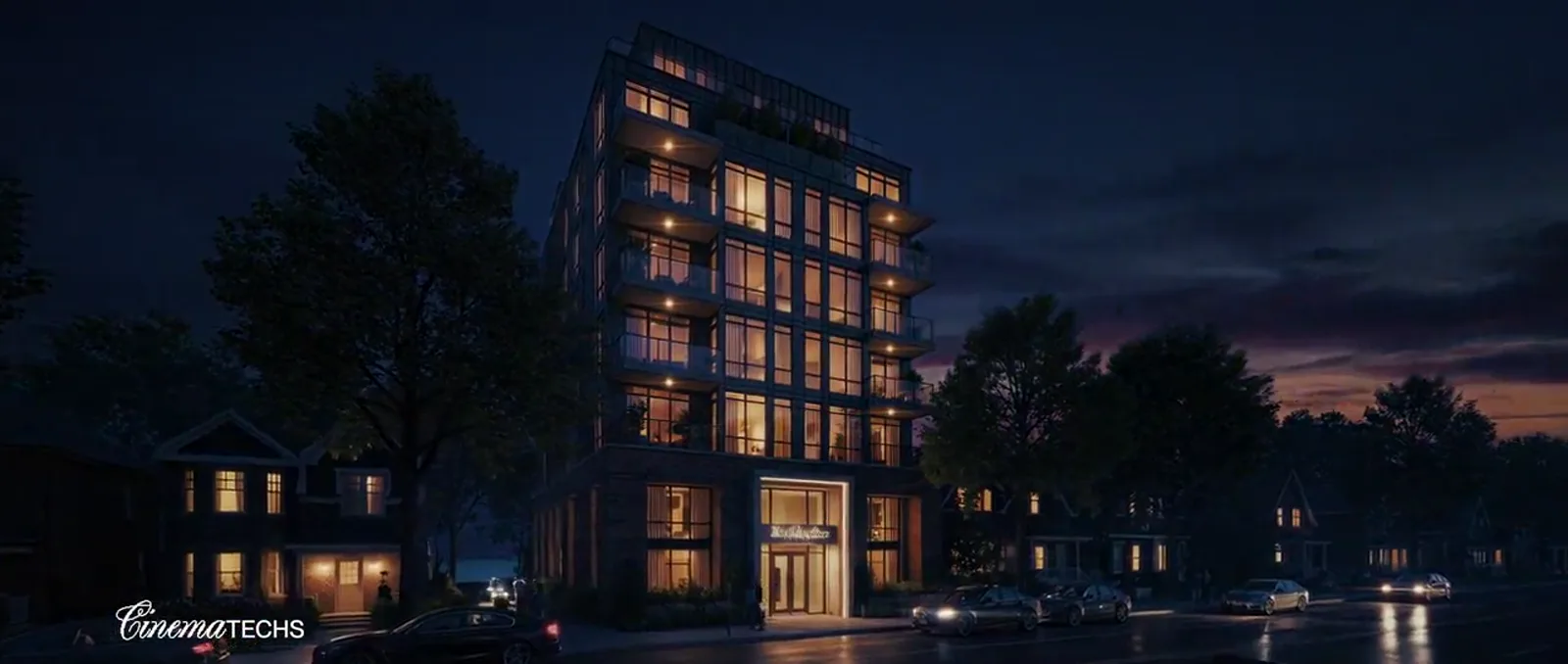
The clearest way to explain the difference is a real one. The Shoreline is a boutique lakeside mid-rise we launched in 2025. We didn't treat it as a render job. We treated it as a film. One building, shot across a full day, from daybreak to blue hour, with a single consistent light story running through it, cut into a launch film and a matched set of stills built to read as photography on the sales-gallery wall. It carried the building from reveal to sell-out.
That's the point of the craft, not the tools: composition, a light story, a sequence a buyer can feel. The building becomes somewhere you can imagine an evening, not a spec sheet in pictures. See The Shoreline →
The same approach solves the establishing-shot problem too. Aerial footage of a Toronto site usually means a permit, a licensed pilot, and a narrow weather window. We generate blue-hour flyovers on demand instead, graded to feature-film standard — a signature move over the neighbourhood without the logistics. See the AI aerials →
What to ask before you hire anyone
Whether you're briefing us or someone else, five questions separate a real partner from a nice-looking reel:
- Where does the imagery come from, and do I own it? With any AI in the pipeline, you want a clear answer on data and licensing, and clean ownership of the final deliverable in writing.
- Is it finished to a real standard? "It looks good on our screen" is not quality control. Sales-gallery and broadcast work is validated to a spec, not eyeballed.
- Are you filmmakers or a render farm? Both are legitimate. Only one gives you composition, lighting, and a cut. Know which you're buying.
- Can you show a delivered launch, not a demo? A polished spec piece proves a tool works. A shipped campaign proves the studio can hit a launch date to a client's bar.
- Who does what, and how fast? Ask what a human directs versus what the pipeline accelerates, and how that maps to your reveal date.
Launching a pre-construction project and weighing film against renders? Tell us the reveal date and the site — we'll come back with a plan within one business day.
Book a call ↗ See the studio & pipelineFAQ
How much do architectural renderings cost in Toronto?
For development-grade work, a single exterior render typically runs about CA$900–$2,500 and an interior about CA$950–$2,800, though the wider market spans from a few hundred dollars to five figures depending on detail, revisions, and who's producing it. A film is scoped as a production, not per image, because it does a different job than a still.
Is video worth it over renders for a pre-construction launch?
For most launches you want both. Stills do the brochure, the portal, and the gallery wall; a film sells the feeling of living there — the light, the movement, the street at dusk — which is the part a frozen image can't carry. If budget forces a choice, lead with the film for the reveal and add a tight set of hero stills.
What should I ask before hiring a real estate video or visualization studio?
Ask where their imagery and any AI-generated content comes from and whether you own it outright, whether the work is finished to a sales-gallery/broadcast standard, whether they're filmmakers or a render farm, and whether they can show a real delivered launch rather than a demo reel. Vague answers on rights or quality control are the warning sign.
How long does a pre-construction marketing film take?
It depends on scope, but an AI-accelerated pipeline compresses the timeline a traditional render-plus-animation process would stretch out — the win is fewer revision cycles and a full day-cycle of looks without a physical shoot. We scope each project to the launch date and return a plan within one business day.